
The HER Journal · Metabolism
What Changes in Your Metabolism After 40, and 3 Things to Do This Week
By Dr. BB Beba, DCN, CNS · Reviewed November 2026
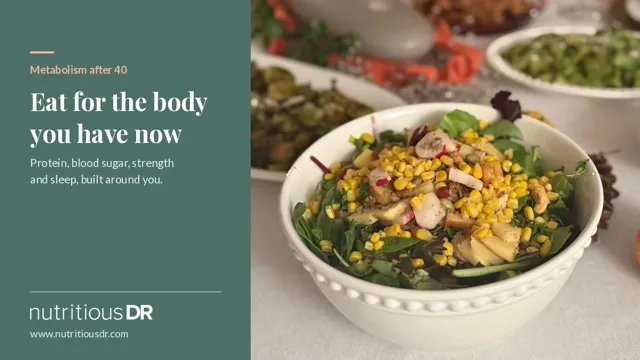
Your metabolism shifts after 40: many women lose some muscle, become less sensitive to insulin as estrogen falls, and feel poor sleep and stress more. Dr. BB Beba, DCN, CNS, of NutritiousDr suggests three starting points this week: protein at breakfast, vegetables and protein before starch plus a short walk after dinner, and two short strength sessions.
So many women ask the same question: “I’m doing what always worked, so why isn’t it working now?” This post is the short version of the answer, plus three things you can actually do this week.
What actually changes in your metabolism after 40?
Nothing is broken. Several quiet shifts tend to arrive together, and for many women they stack up.
- Muscle slowly declines with age unless you work to keep it. Muscle is one of the main places your body uses energy and stores blood sugar.
- Insulin sensitivity often dips as estrogen becomes uneven and then falls, so the same meal can keep blood sugar higher for longer than it used to.
- Fat often settles around the middle as estrogen changes, even when your eating hasn’t.
- Sleep and stress hit harder. Broken nights and long days keep cortisol busy, and a short night can make the next day’s cravings louder.
- Daily movement drops for many of us, between desks, cars and caregiving, often without our noticing.
That’s biology, not failure. The encouraging part is that each of these responds to how you eat, move and rest. You don’t need a dramatic overhaul. You need a few small things, done most days. Here are three.
What can I do about it this week?
Pick one, or try all three. None of them needs special food, an app or a gym membership.
1. Put protein on your breakfast plate
What to do: At breakfast, include a portion of protein about the size and thickness of your palm. Do it on at least four or five mornings this week.
Why it may help: Breakfast is the meal where women most often fall short on protein. Protein helps you hold on to muscle as you age, and a protein-forward breakfast often keeps you fuller and steadier through the morning, so the mid-morning snack hunt may ease.
An easy example: Two eggs scrambled with spinach. A bowl of plain Greek yogurt with berries and a spoon of nuts. Cottage cheese on whole-grain toast. A tofu scramble. Last night’s chicken or salmon next to your toast. If you only drink coffee in the morning, start with the yogurt bowl. It takes two minutes.
2. Eat your vegetables and protein before the starch, then take a short walk
What to do: At one meal a day, eat the vegetables first, the protein next, and the bread, rice, pasta or potato last. Then, after dinner, take a 10-minute walk.
Why it may help: When fiber and protein reach your stomach first, the starch that follows tends to be absorbed more gradually. For many women that means a gentler rise in blood sugar and less of the crash that drives evening cravings. Moving your muscles after a meal also helps them use some of that blood sugar. It’s the same meal on the plate, just a different meal to your bloodstream.
An easy example: At dinner, start with the salad or the roasted vegetables, then the chicken, then the rice. Clear the table, put on your shoes, and walk around the block with a partner, a friend on the phone, or the dog. You don’t need to be strict about it. Loosely front-loading the vegetables and protein is enough to start.
3. Do two short strength sessions
What to do: Twice this week, spend 15 to 20 minutes on simple strength moves. Choose four or five, and do each one slowly for a set or two.
Why it may help: Strength work is how you protect and rebuild the muscle that slowly slips away with age, and muscle plays a big part in how your body handles blood sugar. It also supports your bones as estrogen changes. Long cardio sessions have their place, but for many women in midlife, strength is the piece that’s missing.
An easy example: Sit-to-stands from a kitchen chair, wall push-ups, a glute bridge on the floor, a row with a resistance band or two full water bottles, and a short plank on your knees. Stop well before anything hurts. Please check with your doctor before starting new exercise if you have a health condition.
When is it worth a closer look?
These three steps are a starting point, not the whole story. A free call with us may be worth it if:
- You’ve been doing “everything right” for months and nothing seems to change
- You’re tired most afternoons, or cravings run the show
- Your sleep, mood or cycle have changed and you’re not sure what’s connected
- Your labs keep coming back “normal” but you don’t feel normal. Read why normal bloodwork doesn’t always mean you feel well.
Please see your doctor promptly if you notice unusual thirst, needing to pass urine much more often, weight change you can’t explain, very heavy or unusual bleeding, or chest discomfort or breathlessness when you exercise. Those deserve a medical visit first.
A gentle next step
How can NutritiousDr help with metabolism after 40?
Our 1:1 work follows the HER Healthspan Method: Hormones, Energy and Resilience. Dr. BB reads the bloodwork you already have against optimal ranges, then builds a plan for food, sleep, stress and movement, and Nesko helps you live it with coaching and breath work.
Not sure where to start? Tell us what’s going on, and we’ll point you to the next step that makes sense for you.
Or call (701) 369-0890 · Available to women in New Jersey and Connecticut, online by secure video.
You can read more about how we approach metabolism and weight after 40.
Common questions
Why is my metabolism slowing down after 40?
For many women it’s a mix of slowly losing muscle, becoming less sensitive to insulin as estrogen falls, and poorer sleep and more stress. None of these is a personal failing, and each one responds to how you eat, move and rest.
How much protein should I eat at breakfast?
A simple place to start is a portion about the size and thickness of your palm. The right amount for you depends on your body, your activity and your medical history, so it is worth personalizing with a clinician.
Does the order I eat my food in really matter?
For many women, yes. Eating vegetables and protein before the starch at a meal often leads to a gentler rise in blood sugar than eating the same foods the other way round.
Do I need to go to the gym to build muscle after 40?
No. Simple moves at home, like sit-to-stands, wall push-ups and glute bridges, are a good place to begin. Check with your doctor before starting new exercise if you have a health condition.
Keep reading
- Metabolism and weight after 40
- The HER Healthspan Method
- Normal bloodwork, but still feel sick?
- Perimenopause and menopause nutrition
This post is for education and is not medical advice. We do not diagnose, treat, cure or prevent any disease. Individual results vary. Our work supports, and never replaces, care from your doctor. Please read our Medical Disclaimer.